Use case
The site lives next to the work
The problem
What gets in the way
The marketing site is a different login from the delivery board. A launch means exporting copy, pasting it into a builder, and hoping the form submissions reach the person who owns the pipeline.
What changes
After you start using it
- 01
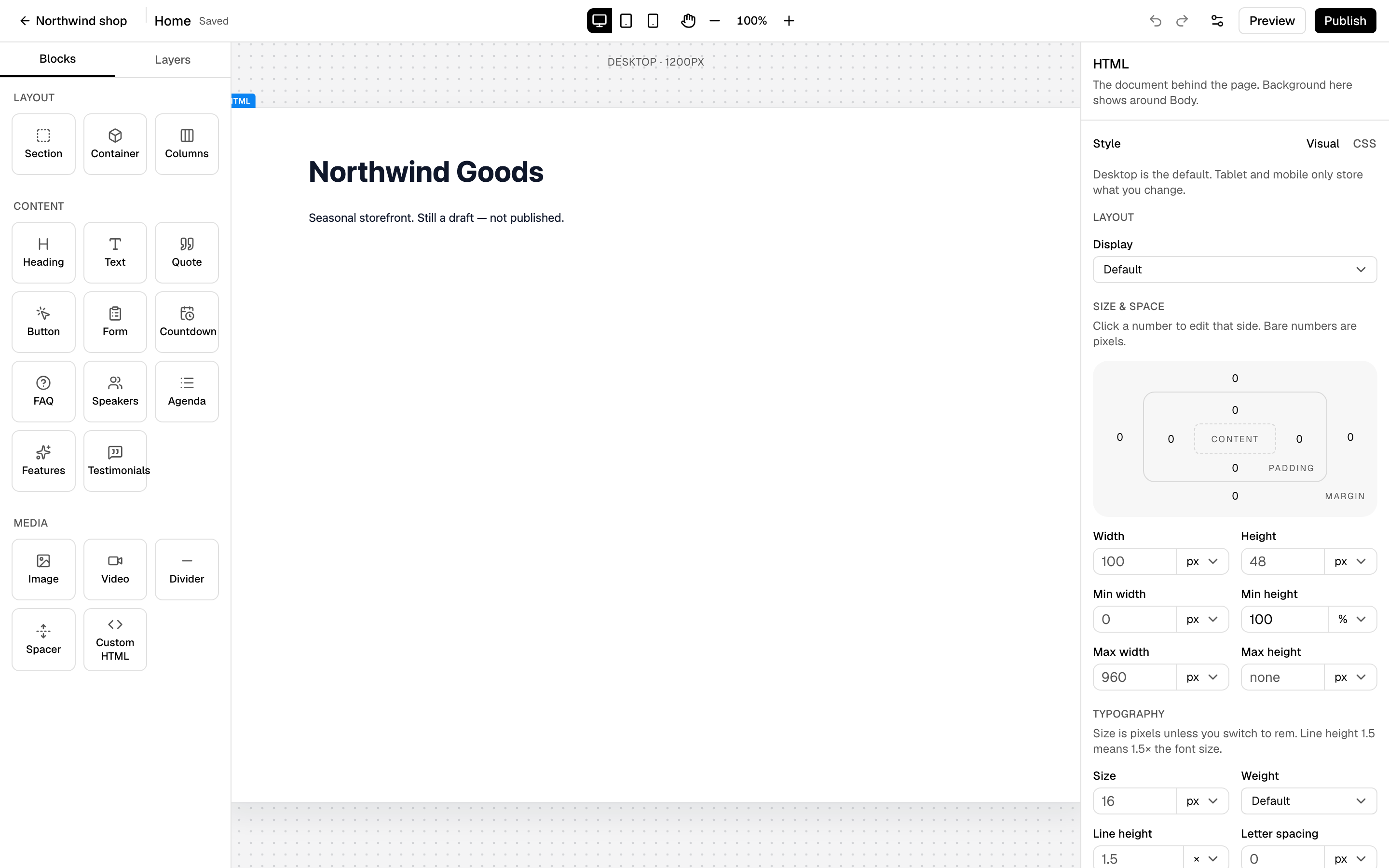
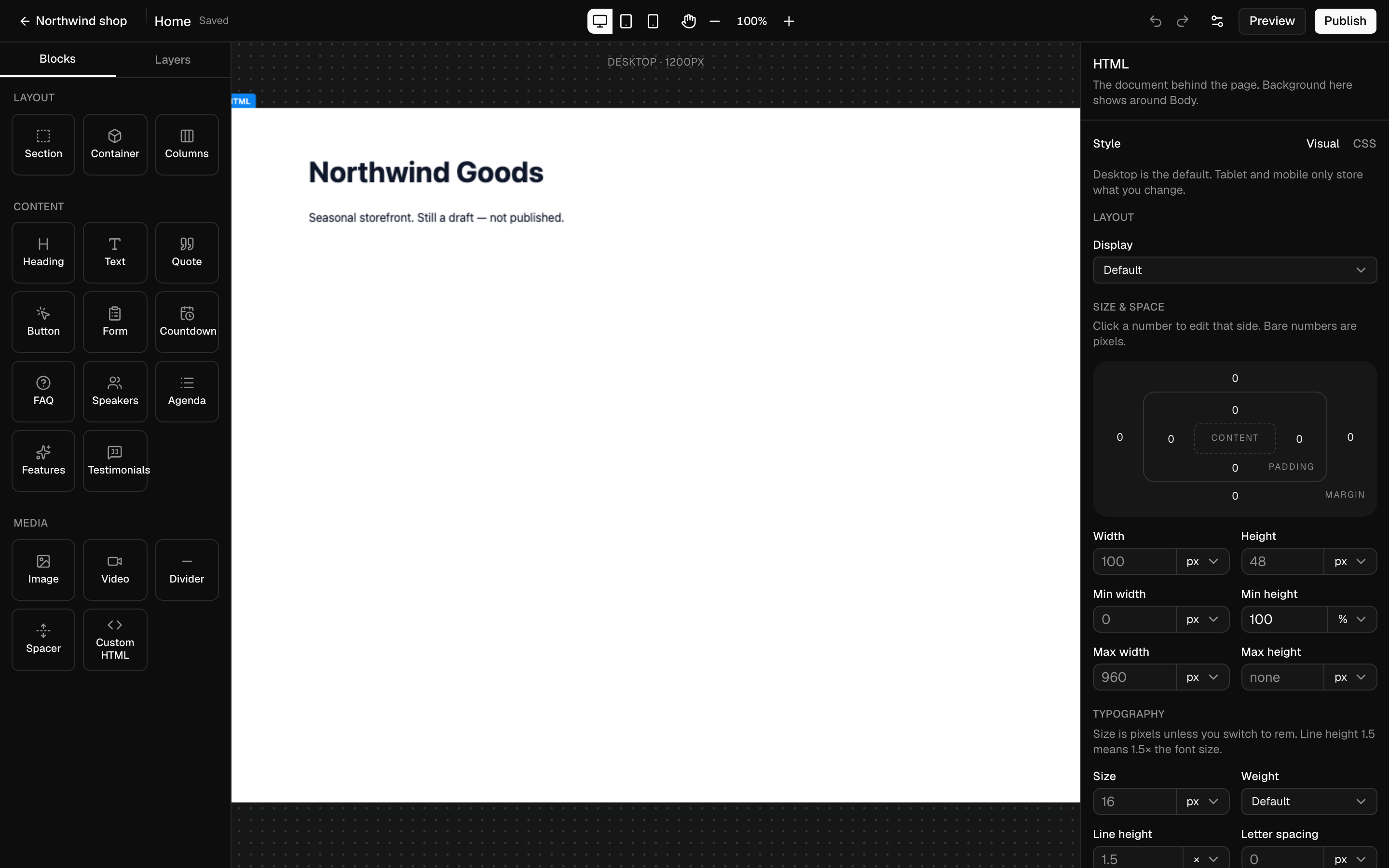
Pages, a homepage, and publish in the same workspace as the project
- 02
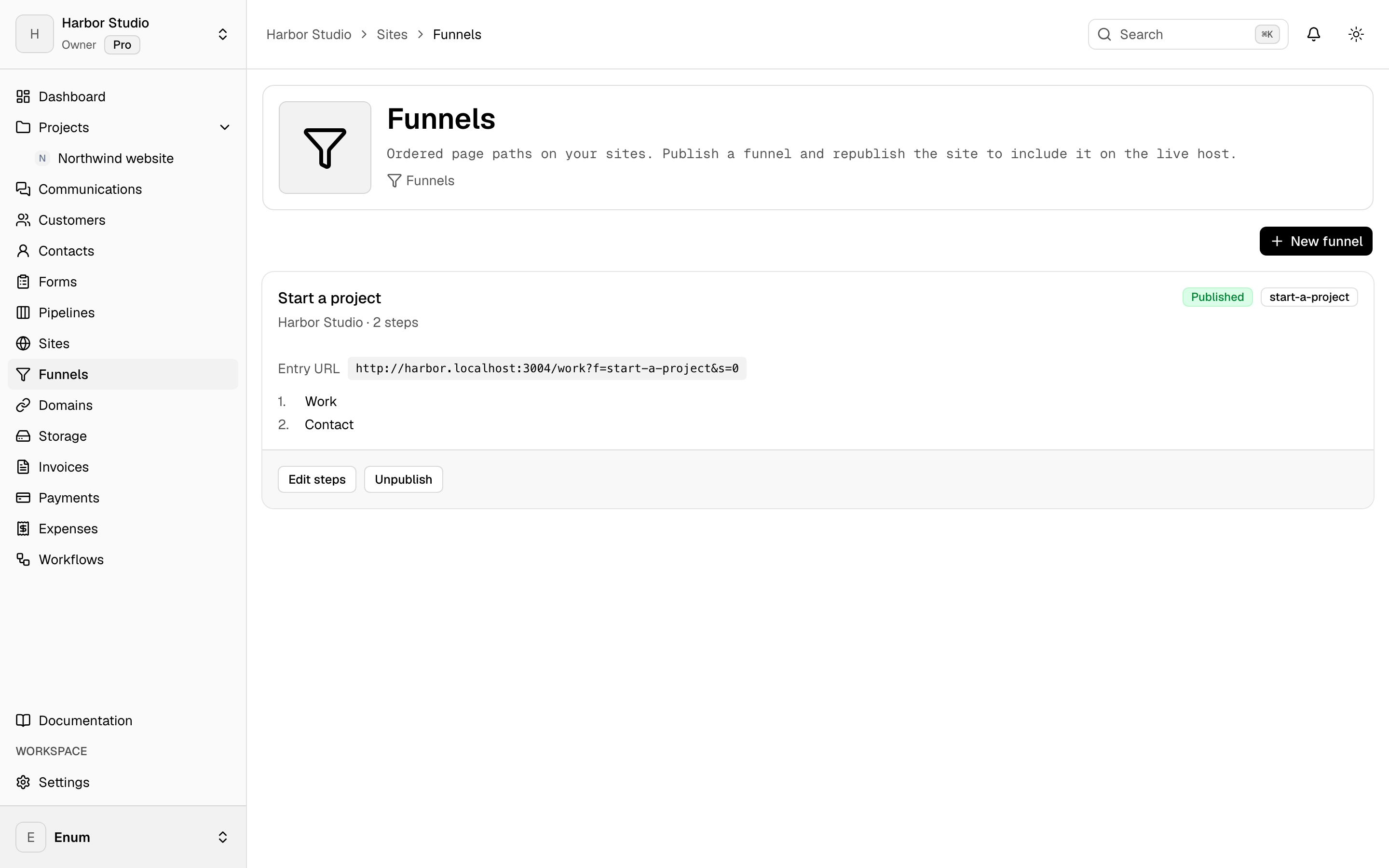
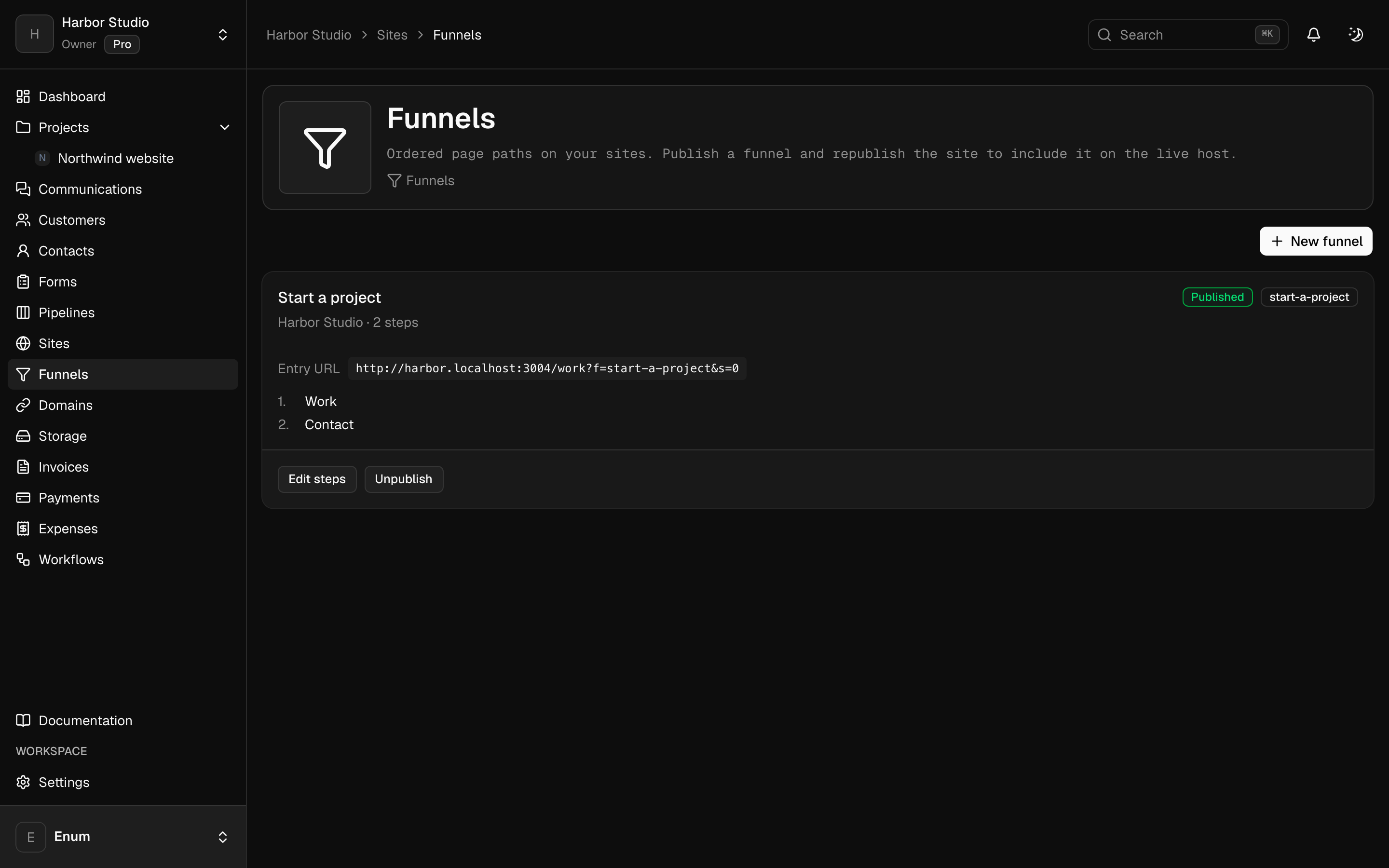
Funnels as a sequence, with the form submission staying in Planeward
- 03
Your domain, and the tag or pixel you already run
Workflow
From a draft page to a domain
- 01
Create a site on Pro. Build the page. Publish when it is ready. Roll back a version if it is not.
- 02
Add a form to a page, or build a funnel as an ordered set of steps.
- 03
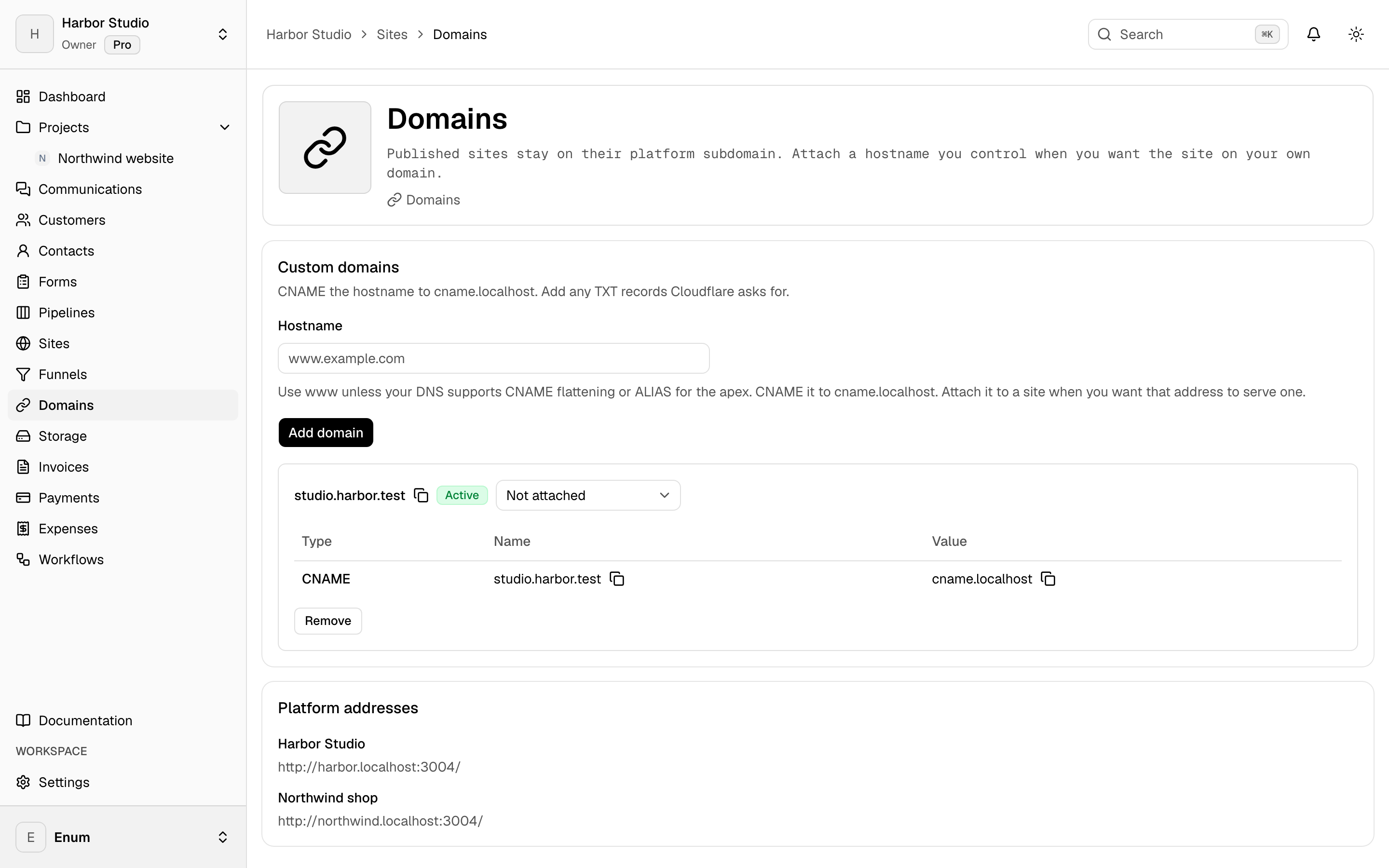
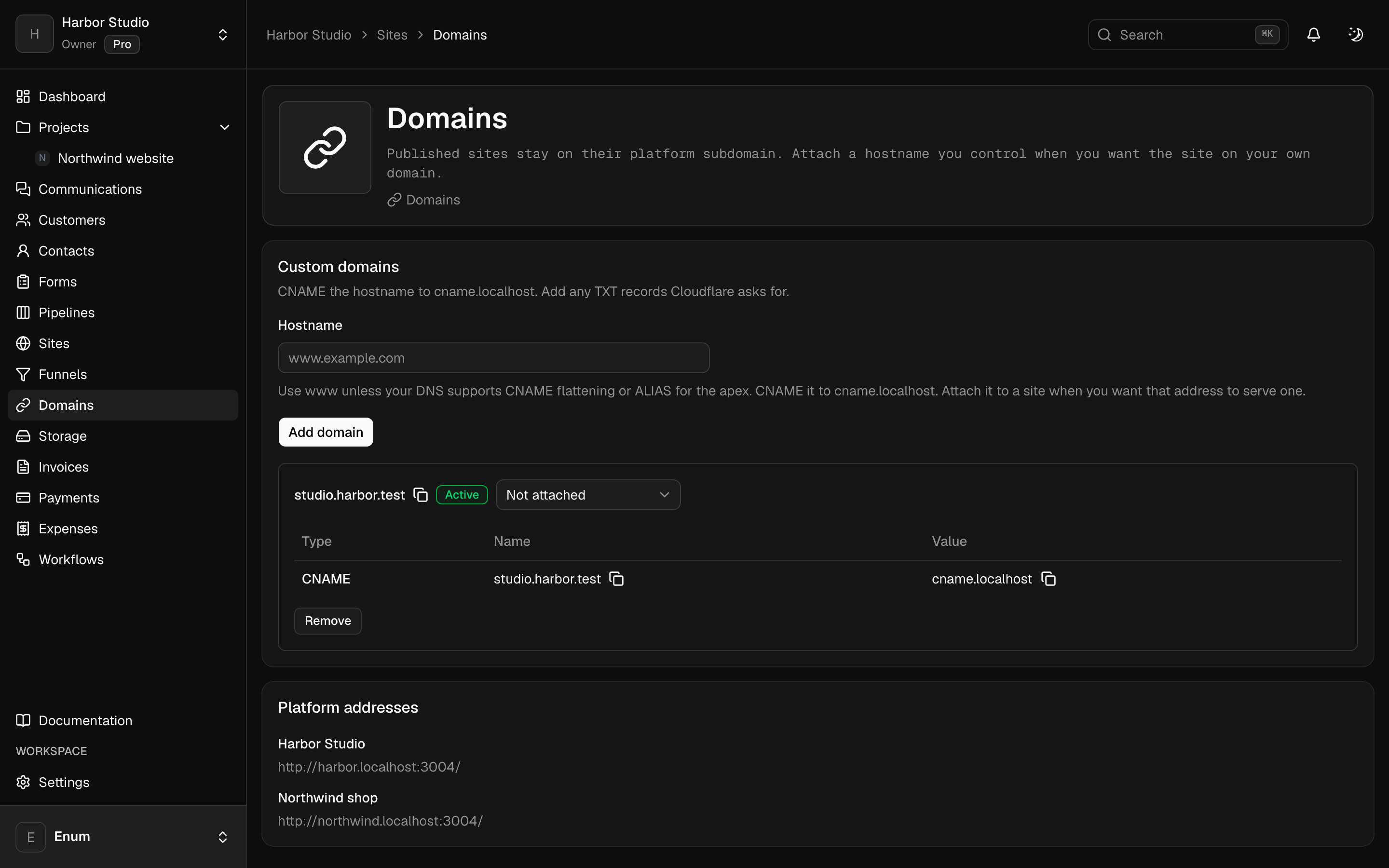
Attach the domain and add the DNS records. Then add Tag Manager or Meta, not both for the same pixel.
What you use
Capabilities in this job
- 01
Sites
Build pages in the workspace, keep versions, and publish when the page is ready. A funnel is an ordered path through those pages. Attach a domain you own. Add Google Tag Manager or a Meta pixel and Conversions API on the site. Use one of those for Meta, not both. Sites is on Pro.
- 02
Forms
Forms live with the clients, not in a separate form tool. Build the fields, set the appearance, and share the link. Submissions stay in the workspace. You can generate a first draft of the form from a description. A form can also sit on a site page.
Questions